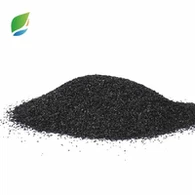
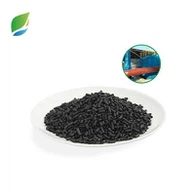
What is Coal Based Granular Activated Carbon?
Coal-based granular activated carbon (GAC) is a type of activated carbon that is made from coal. It is a highly porous material with a large surface area, which makes it ideal for adsorbing a wide range of contaminants from water and air.
Why Choose Us
High quality
Our products are manufactured or executed to very high standards, using the finest materials and manufacturing processes.
Competitive Price
We offering a higher-quality product or service at an equivalent price. As a result we have a growing and loyal customer base.
Rich experience
Our company has many years of production work experience. The concept of customer-oriented and win-win cooperation makes the company more mature and stronger.
Global shipping
Our products support global shipping and the logistics system is complete, so our customers are all over the world.
After-sale service
Professional and thoughtful after -sales team, let you worry about us after -sales Intimate service, strong after -sales team support.
Advanced equipment
A machine, tool or instrument designed with advanced technology and functionality to perform highly specific tasks with greater precision, efficiency and reliability.

Coal based activated carbon with high quality anthracite as raw material, activation and the use of advanced technology refined processing carbide, coal activated carbon pellets has a reasonable pore structure, developed pore structure, large surface area, light weight, strong adsorption capacity, good abrasion resistance, high adsorption properties, high mechanical strength and long working time.

Coal columnar activated carbon is made from high quality coal, with rich absorption holes, well stability and strength. They, as Chemical Auxiliary Agent, are widely used in gas treatment, sewage treatment, desulfurization and denitration, solvent recovery, nitrogen generation, air separation equipment, paint workshop and other fields.

Coal Based Granular Activated Carbon
High purity activated carbon is a highly effective adsorber of organic compounds and is used to remove residual organic compounds in purified water.

Material: Coal
Exterior: Black Columnar
Specific Surface Area: 400-1500㎡/g
Iodine Value: 700-1100mg/g

The advantages of for coating plant, organic solvents,volatile gas masks toxic gas purification, gas processing , industrial and domestic water purification, solvent recovery and so on.

Active Carbon Production From Coal
Granular coal activated carbon produced by high quality anthracite. This product widely used water treatment and waste air purification, This product has all the functions of other activated carbons.

Activated Charcoal Pellets for Odor Control
Take high quality coal or wood as raw materail
It is black pellets with large specific surface area
Deveoped and reasonable pore structure.
What Are the Advantages of Coal-Based Activated Carbon?
The main characteristics of the application of coal-based granular activated carbon are low equipment investment, low price, fast adsorption speed, and strong adaptability to short-term and sudden water pollution.
Coal-based granular activated carbon has a significant effect on removing chroma. It is reported that the removal of chroma can reach 70%, and the low chroma indicates that the efficiency of removing organic matter is high, and the effect of removing iron and manganese is good.
Coal-based granular activated carbon helps to remove algae. The addition of coal-based granular activated carbon blocks the light absorption of algae, and at the same time has a significant coagulation-assisting effect in water sources with low turbidity, which helps to remove algae in coagulation sedimentation.
The chemical oxygen demand and five-day biochemical oxygen demand were greatly reduced coal-based granular activated carbon. The decrease of these indicators positively related to the degree of organic pollution in the water body indicated the degree of removal of toxic and harmful substances in the water body.
The effect of coal-based granular activated carbon on the mutagenicity of water can effectively remove organic pollutants. It is a simple way to improve the quality of drinking water by conventional technology.
Coal Activated Carbon Pellets Are Playing an Important Role in Wastewater Treatment
Today more and more people realize the importance of environment protection, activated carbon (AC) as the most basic purification material which is widely used in our daily life. For instance AC is one of the most effective material used for liquid phase absorption and gas phase absorption, this way effectively purify urban air and clean drinking water, which makes our breath air fresher and drinking water safer, because AC absorb the harmful substances from the air and water. There are different types of AC, the most popular one is Columnar Activated Carbon (CAC) which is coal based activated carbon, it mostly used in industry water treatment.
To make coal activated carbon needs through several process: Step 1. grinding; Step 2. Extrusion; Step 3. Drying; Step 4. Carbonation; Step 5. Active; Step 5. Cooling; Step 6. Screening. Because the appearance is columnar, so it is named columnar activated carbon (CAC). CAC has a very well-developed pore structure lays down its powerful absorption function, and has been used activated carbon easily recycle , and because of the carbonation process made it own high mechanical strength. So CAC is one of the most popular material which used in gas phase absorption, exhaust gas treatment, industry and daily life waste water treatment, solvent recovery and other aspects.
Coal based Activated Carbon is made of high quality anthracite, go through advanced processing technology, its appearance is black columnar and it has well- developed porous structure, great absorption ability, high mechanical strength, easily recycle features.
Columnar Activated Carbon is mostly used to treat waste water from Chemical, Metallurgy, Food, Paint factory, when activated carbon is used in water treatment, actually it mainly by utilize the physical property of columnar activated carbon, because activated carbon has very rich porous structure so which can absorb harmful substances from air and water. The price of Columnar Activated Carbon is lower compare with other water treatment materials, so in many cases people would like choosing Activated Carbon to remove micro pollutants. In water treatment there are many process and each process will use different size and different type of activated carbon. So when you choose the product, first you need mention your application.
Although Coal Columnar activated carbon is flammable, it won't easily burn in natural environment, but in high temperature will increase the chance of burning and there is no open fire when it burn, so please pay attention on inspection and store activated carbon in ventilation and cooling and not smoke in this area, never store AC with gasoline, diesel, grease and any flammable substances.
How to Make Coal-Based Activated Carbon
Activated carbon is one of many industrial adsorbents, which is a multi-functional adsorbent. Activated carbon can be made from a variety of carbonaceous feedstocks, including raw coal, wood, coconut shells, palm shells, petroleum coke, and more.
Coal, as the most abundant carbon-containing raw material in the world, is widely used in the production of coal-based activated carbon. Among them, coal activated carbon production lines are mostly distributed in countries and regions rich in coal resources. What is the production process of coal-based activated carbon?
Carbonization of Coal-Based Activated Carbon
Activated carbon is a carbonaceous adsorbent formed by the carbonization and activation of carbon-containing materials. Therefore, the production of coal-based activated carbon requires two necessary sections, namely carbonization, and activation.
Carbonization is one of the main heat treatment processes in the activated carbon manufacturing process, and the main production is carried out in the activated carbon carbonization plant. Commonly used equipment mainly includes activated carbon rotary kilns, fluidized furnaces, and vertical carbonization furnaces.
Coal activated carbon is usually carbonized at a temperature of 350-600 °C. In the carbonization process, most of the non-carbon elements – hydrogen and oxygen are firstly eliminated in the form of gas due to the high-temperature decomposition of the raw material, excluding the volatile matter and moisture in the raw material, and the released element carbon atoms are combined into a general called basic graphite microstructure. The orderly crystallization product of the crystal makes the carbon particles form preliminary pores and has the structure of the original form of activated carbon.
After the raw material is carbonized, we call it carbonized material. The carbonized material already has a certain adsorption capacity, but the adsorption capacity is extremely low. After testing, the iodine adsorption value of the general carbonized material is only about 200mg/g.
Activation of Coal-Based Activated Carbon
The activation method of coal-based activated carbon is divided into the physical activation method (also called the gas activation method) and the chemical activation method according to the different activators.
Coal-based activated carbon is carried out in activated carbon activation production equipment. The commonly used activation method is the physical activation method, using water vapor, flue gas (mixed gas of water vapor, CO2, N2, etc.), CO2, or air, etc. as the activation gas, Contact with carbonized material at a high temperature of 800 ℃-1000 ℃ for activation.
The activation process achieves the purpose of pore formation through three stages opening the originally blocked pores, expanding the original pores, and forming new pores.
● Finished Product Treatment of Coal-Based Activated Carbon
Granular activated carbon (GAC)
The finished product section is mainly made into products with different particle sizes according to application needs. For granular activated carbon, there are mainly three processes crushing, screening, and packaging.
The crushing equipment usually adopts a double-roller crusher. By adjusting the gap size between the double-rollers, the particle size of the product is controlled to improve the yield of qualified particle size screening.
The screening equipment usually uses a vibrating screen to screen the crushed materials into three types: larger particle size, qualified, and smaller particle size. In the actual production process, multi-layer screens are often added to the vibrating screen to screen out products within several particle size ranges, and the products with qualified particle sizes are packaged and sold after screening. In addition, in the production process, stone removal machines and iron removers are also used for special-purpose products to reduce the ash content of the products.
Powder activated carbon
For powdered activated carbon, there are mainly two processes grinding and packaging. Grinding powder is basically produced by Raymond mill equipment in most factories. By adjusting the analyzer of the mill, finished powdered carbon with a particle size of 200 mesh and 325 mesh can be produced.
Deep Processing of Coal Activated Carbon
For some special-purpose products, the finished coal activated carbon will be further processed such as acid washing, alkali washing, and water washing.
The purpose of pickling is mainly to reduce the ash content of activated carbon and avoid secondary pollution caused by activated carbon during use so that it can be better used in food or other industries.
There are also some application fields that require activated carbon to impregnate agents to achieve better adsorption.
Comparison of Wood-Based Activated Carbon and Coal-Based Activated Carbon


Wood based activated carbon and coal based activated carbon are two common types of activated carbon, they are used in air filtration, water treatment, solvent recovery and etc.
Wood-based activated carbon has many types, such as coconut shell activated carbon, fruit shell activated carbon, wood-based poder activated carbon, wood-based granular activated carbon, etc. Coal-based activated carbon includes coal-based powder activated carbon, coal-based columnar activated carbon, and coal-based granular activated carbon. Wood-based activated and coal-based activated carbon have similarities in shape and color, how to distinguish them in an easier way?
Wood-base activated carbon
Wood-based activated carbon production use superior fuelwood, sawdust, and wood chips as raw materials, adopts physical method, phosphoric acid method, and zinc chloride method, and processes all materials into activated carbon.
The mesoporous structure and specific surface area of wood-based activated carbon are more developed so that its adsorption capacity is large and the filtration speed is fast. High strength low ash, reasonable pore size distribution; High ignition point.
Coal-based activated carbon
Coal-based activated carbon production mainly include carbonization and activation. Coal-based activated carbon has a well-developed pore structure, good absorbability, high mechanical strength, easy recovery, cost-effectiveness, etc. coal-based activated carbon is applied for toxic gas purification, waste gas treatment, industrial and domestic water purification treatment, solvent recovery, and other aspects.
Differences between wood-based activated carbon and coal-based activated carbon
Wood-based activated carbon is made from sawdust, fruit shell, and "three residues" of forest products. Coal-based activated carbon is made from coal-based material. Due to the different raw materials, wood-based activated carbon and coal-based activated carbon are different in the production process, technology, product attribute, and applications, etc.
Liquid phase adsorption: coal-based activated carbon contains large quantity of heavy metal and ash, lower product purity. Coal-based activated carbon mainly adopt phsical method, pore is microporer, suitable for small molecule adsorption, so it has narrow application range, generally include petrochemical, metallurgy, printing and dyeing, sewage treatment and other industrial fields. Wood-based activated carbon has low content of ash, less impurities, it is easy to purify. Under the chemical production process, it is easy to adjust the pore distribution structure of activated carbon, with well-developed micropores and mesopores, and is widely used, especially in food and beverage, medicine and other fields that require high adsorption performance and product safety. So, wood-base activated carbon cannot be replaced with coal-based activated carbon.
Gas phase adsorption: coal-based activated carbon has big intensity, and it is convenient to recover, so it is normally used in the gas phase adsorption. Wood-based activated carbon has lower intensity, Traditionally, it is not used for gas phase adsorption. However, with the advancement of technology and the improvement of production technology, the application of wood activated carbon has also been expanded to some emerging gas phase adsorption fields such as oil and gas recovery, household air purification, etc. and as people pay attention to health, with the increasing attention to environmental protection, its application space in the field of gas phase adsorption will further increase.
From the view of potential: coal resource is non-renewable, coal-based activated carbon resources are limited and carbon dioxide emissions are greatly increased during the production process, so product prices are on the rise driven by raw materials and environmental protection costs. Because the main raw material of wood-based activated carbon is the "three leftovers" of forest products, which can be recycled, and the price is expected to tend to decrease relatively due to technological progress, the long-term competitive advantage of wood-based activated carbon is higher than that of coal-based activated carbon.
Wood-based activated carbon and coal-based activated carbon are different in the production process, technical characteristics, product characteristics, and many other aspects. Therefore, from the perspective of industry, they belong to different industrial fields. The former belongs to the forest product chemical industry, and the latter belongs to the coal chemical industry. At the same time, due to the difference in the downstream application fields of coal-based activated carbon and wood-based activated carbon, the downstream customers of wood-based activated carbon and the units that use coal-based activated carbon are also different. The downstream users of wood-based activated carbon are mainly in the fields of food and beverage, medicine, etc., while the customers of coal-based activated carbon manufacturers are concentrated in industrial fields such as chemical industry, printing and dyeing, and sewage treatment.
How to distinguish wood-based activated carbon and coal-based activated carbon?
In fact, in terms of appearance, wood-based activated carbon and coal-based activated carbon are not easy to distinguish, but we can use a few simple methods to distinguish them.
• Weight: Put the powdered activated carbons of two materials in the same humidity space for several days, and then weigh two kinds of carbons of the same quality, the smaller one is coal-based charcoal, and the larger one is wood-based charcoal.
• Ash: Weigh two powdered activated carbons of the same quality and burn them. The one with less ash content can be preliminarily confirmed to be wood powdered activated carbon.
Our Factory
Hongsen company, founded in 2000, is a professional manufacturer of activated carbon in Shijiazhuang City, Hebei Province, and currently produces various multi-purpose series of activated carbon. The company has passed ISO9001:2008 quality management system. The company researches and develops various series of activated carbon, forming a vertically integrated business structure from raw material collection and processing to product terminal sales.

FAQ
Hot Tags: coal based granular activated carbon, China coal based granular activated carbon manufacturers, suppliers, Activated Carbon For Gold Recovery, activated carbon adsorbent, Activated Carbon, Wood Vinegar Liquid, activated charcoal for water filtration, Granular Activated Carbon Coconut Shell