Your Leading Shijiazhuang Hongsen Activated Carbon Co., Ltd. Supplier
Hongsen company, founded in 2000, is a professional manufacturer of activated carbon in Shijiazhuang City, Hebei Province, and currently produces various multi-purpose series of activated carbon. The company has passed ISO9001:2008 quality management system. The company researches and develops various series of activated carbon, forming a vertically integrated business structure from raw material collection and processing to product terminal sales.
Why Choose Us?
High quality
Our products are manufactured or executed to very high standards, using the finest materials and manufacturing processes.
Competitive Price
We offering a higher-quality product or service at an equivalent price. As a result we have a growing and loyal customer base.
Rich experience
Our company has many years of production work experience. The concept of customer-oriented and win-win cooperation makes the company more mature and stronger.
Global shipping
Our products support global shipping and the logistics system is complete, so our customers are all over the world.
After-sale service
Professional and thoughtful after -sales team, let you worry about us after -sales Intimate service, strong after -sales team support.
Advanced equipment
A machine, tool or instrument designed with advanced technology and functionality to perform highly specific tasks with greater precision, efficiency and reliability.
Related Product

Coal based activated carbon with high quality anthracite as raw material, activation and the use of advanced technology refined processing carbide, coal activated carbon pellets has a reasonable pore structure, developed pore structure, large surface area, light weight, strong adsorption capacity, good abrasion resistance, high adsorption properties, high mechanical strength and long working time.

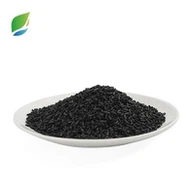
Coal columnar activated carbon is made from high quality coal, with rich absorption holes, well stability and strength. They, as Chemical Auxiliary Agent, are widely used in gas treatment, sewage treatment, desulfurization and denitration, solvent recovery, nitrogen generation, air separation equipment, paint workshop and other fields.

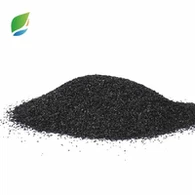
Coal activated carbon powder is made from high quality coal, with rich absorption holes, well stability and strength. They, as Chemical Auxiliary Agent, are widely used in gas treatment, sewage treatment, desulfurization and denitration, solvent recovery, nitrogen generation, air separation equipment, paint workshop and other fields.

Coal Based Granular Activated Carbon
Coal based granular activated carbon, China coal based granular activated carbon manufacturers, suppliers, Charcoal Powder For Water Purification, Active Carbon Production From Coal, activated charcoal bags, activated carbon plant, decontamination activated charcoal, activated carbon for purification.

Active Carbon Production From Coal
Granular coal activated carbon produced by high quality anthracite. This product widely used water treatment and waste air purification, This product has all the functions of other activated carbons.

Charcoal Powder For Water Purification
Coal activated carbon powder is made from high quality coal, with rich absorption holes, well stability and strength. They, as Chemical Auxiliary Agent, are widely used in gas treatment, sewage treatment, desulfurization and denitration, solvent recovery, nitrogen generation, air separation equipment, paint workshop and other fields.

Activated Charcoal Pellets For Odor Control
Take high quality coal or wood as raw materail.
It is black pellets with large specific surface area.
Deveoped and reasonable pore structure.

The advantages of for coating plant, organic solvents,volatile gas masks toxic gas purification, gas processing , industrial and domestic water purification, solvent recovery and so on.
What is Pellet Activated Carbon?
Pellets activated carbon is an efficient adsorbent material characterized by its long and slender columnar or cylindrical shape. Compared to other forms of activated carbon, columnar carbon is quick easier to handle, fix, and stack, making it an ideal choice for many gas-phase adsorption applications.
The adsorption principle of pellets activated carbon lies in its unique pore structure. With a wide range of pore sizes, including micropores, mesopores, and macropores, the differences in pore sizes enable columnar activated carbon to adsorb molecules of various sizes and types.
Through physical and chemical adsorption processes, extruded activated carbon can capture and bind liquid or gaseous substances, thereby purifying the environment or treating specific pollutants. This type of activated carbon is widely used in air purification, waste gas treatment, solvent recovery, water treatment, and other fields.
It has a high adsorption capacity and effectively adsorbs pollutants.
It offers a lower pressure drop, which contributes to energy savings.
It has a high mechanical resistance, which
Compared to granular activated carbon, it forms less dust, which reduces the dust load in processes.
It has a higher density, so more activated carbon can be stored in a smaller volume.
It has a homogeneous structure, which ensures better distribution in the water or gas flow.
It is durable and can generally be used for longer periods of time.
It has good regeneration properties, i.e., it can be reactivated after use.
It is easier to handle and transport.
Water treatment: Pelletized activated carbon is often used in water purification systems. It is used to remove unwanted compounds such as organic pollutants, bad taste, and odour from water. Pelletized activated carbon adsorbs the pollutants in the water and enables it to be purified. It also improves the colour, smell, and taste of the water.
Ventilation and air conditioning systems: Pelletized activated carbon is used effectively in air filters and ventilation systems. It is used to remove bad odours, chemicals, and harmful gases from the air. This ensures clean and healthy air indoors.
Solvent recovery: Pelletized activated carbon is used to recover solvents used in chemical processes. Solvents commonly used in the chemical industry can be recycled after the production process. Pelletized activated carbon adsorbs solvents, separates them, and makes them reusable.
Gas purification: Pelletized activated carbon is used in gas purification. It plays an effective role in the removal of harmful gases produced during industrial processes. Pelletized activated carbon ensures clean air emissions by adsorbing pollutants in gases.
Chemical processes: Pelletized activated carbon is used in various chemical processes. It is used, for example, to remove unwanted by-products from chemical reactions and for the adsorption and purification of pollutants in the solid or liquid phase. Pelletized activated carbon can be used effectively in the chemical industry.
Pharmaceutical industry: Pelletized activated carbon is a material used in the pharmaceutical industry. It is used in pharmaceutical production processes for the purification of raw materials, the removal of undesirable compounds, and the adsorption of various chemicals. Pelletized activated carbon plays an important role in improving the quality of drugs and reducing unwanted side effects.
Food and beverage industry: Pelletized activated carbon is also used in the food and beverage industry. It is used in food production for purposes such as removing undesirable odours and tastes, adsorption of coloured components, and removal of chemical residues. It can also be used to clarify beverages and purify sweeteners.
Air purification: Pelletized activated carbon is used effectively in air purification applications. It is used in air filtration systems to remove harmful gases, chemical odours, and particulate matter. In this way, clean and healthy air quality is achieved indoors.
Solvent gas purification: Pelletized activated carbon is also used in the purification processes of solvent gases. This application ensures the purification of solvent gases before combustion and the removal of harmful components. Pelletized activated carbon adsorbs pollutants by contacting solvent gases, and a clean gas flow is obtained.
Process of Pellet Activated Carbon
Carbonization
In an oxygen-restricted setting, raw materials like wood, coconut shells, or other organic substances are subjected to heat, enabling the removal of volatile components and the formation of a carbon-rich substance. Carbonization temperatures typically fall between 400 and 600°C, yielding a porous, carbon-laden material known as char.
Methods of activation
Activation develops the internal pore structures and augments the surface area of the carbonized material, thus enhancing adsorption capacity. There are two primary activation techniques:
Physical activation: Here, the carbonized material is heated to high temperatures (800-1000°C) in the presence of an oxidizing gas like steam or carbon dioxide. The reaction between the gas and carbon material generates a porous structure with a vast surface area.
Chemical activation: In this approach, a chemical activating agent, such as phosphoric acid, potassium hydroxide, or zinc chloride, impregnates the carbonized material. The mixture is then heated at lower temperatures (400-800°C) relative to physical activation. A porous structure with a large surface area is created by the chemical reaction between the activating agent and the carbonized material.
Shaping and pelletizing
Activated carbon powder is blended with a binder like starch or molasses to enhance mechanical strength and handling characteristics. This mixture is then fashioned into pellets using methods such as extrusion, pelletizing, or tabletting. The pellet size can be manipulated by adjusting the shaping process parameters.
Post-processing techniques
Depending on the intended application, several post-treatment processes may be employed to improve the performance of the activated carbon pellets. These processes include:
Washing: Pellets can be rinsed with water or a diluted acid solution to remove residual chemicals or impurities from their surfaces.
Drying: To eliminate moisture that could affect adsorption properties, washed pellets are dried at low temperatures (100-150°C).
Activation: In certain cases, a secondary activation step might be needed to further expand the surface area and pore structure of the pellets.
There are several materials that can be used as substitutes for activated carbon and charcoal, depending on the specific application. Some common substitutes include:
Wood vinegar: This is a liquid produced by heating wood to create vinegar. It can be used as a deodorizing agent and can also absorb toxins and impurities.
Bentonite clay: This is a naturally occurring clay that is highly porous and has a strong ability to absorb impurities. It is often used in the production of animal feed and as a natural detoxifying agent.
Peat moss: This is a type of sphagnum moss that is commonly used as a soil amendment. It has a high water-holding capacity and can also absorb impurities.
Fullers earth: This is a type of clay that is often used as a natural absorbent and decolorizing agent.
These materials all work by adsorbing impurities, meaning that they attract and hold onto contaminants through a process of chemical attraction. This can be effective for removing a variety of impurities, including odors, toxins, and excess moisture. However, they may not be as effective as activated carbon or charcoal, which are specifically designed for maximum adsorption efficiency. Additionally, the specific adsorption properties of these materials may differ from those of activated carbon and charcoal.
How does Granular Activated Carbon Work?
The surface of granular activated carbon is made up of microscopic holes and channels, known as pores, only visible under a suitably powerful microscope. It is these pores that result in its huge surface area – the statistic often quoted is that a teaspoon of granular activated carbon has the same surface area as a football pitch!
When a contaminated fluid passes through a filtration device containing granular activated carbon, the impurities are trapped within these pores in a process called adsorption, allowing the purified fluid to pass through. Typical applications for granular activated carbon include the removal of taste, odour and colour from drinking water, as well as traces of other dissolved contaminants such as pesticides and herbicides.
One of the key advantages with using granular activated carbon for fluid purification, rather than powder activated carbon, is that granular activated carbon can be recycled for reuse via a process called thermal reactivation. Carbon that is spent, ie the pores are filled with contaminants so that the treatment objective is no longer being achieved, can be passed through a high temperature kiln. The contaminant molecules are forced out of the pores and destroyed, leaving a reactivated granular activated carbon ready to be used again and again in the customer's process.
CPL Activated Carbons operates two separate state-of-the-art reactivation kilns at its site in Immingham, NE Lincs, one dedicated to treating spent carbons from drinking water and food-grade end-users, the other for industrial applications such as wastewater treatment and biogas purification.
The recycling of granular activated carbon in this way not only saves money, but also offers massive environmental benefits, with a CO2 footprint saving in excess of 90% compared with the use of fresh 'virgin' material.
Our Factory
Hongsen company, founded in 2000, is a professional manufacturer of activated carbon in Shijiazhuang City, Hebei Province, and currently produces various multi-purpose series of activated carbon. The company has passed ISO9001:2008 quality management system. The company researches and develops various series of activated carbon, forming a vertically integrated business structure from raw material collection and processing to product terminal sales.


Our Certificate


FAQ
Hot Tags: pellet activated carbon, China pellet activated carbon manufacturers, suppliers, Activated Charcoal Powder For Food, Coal Powder Activated Carbon, activated charcoal smell remover, Gold Extraction Activated Charcoal, Carbon Active Coal, Wood Vinegar For Plants