Your Leading Shijiazhuang Hongsen Activated Carbon Co., Ltd. Supplier
Hongsen company, founded in 2000, is a professional manufacturer of activated carbon in Shijiazhuang City, Hebei Province, and currently produces various multi-purpose series of activated carbon. The company has passed ISO9001:2008 quality management system. The company researches and develops various series of activated carbon, forming a vertically integrated business structure from raw material collection and processing to product terminal sales.
Why Choose Us?
High quality
Our products are manufactured or executed to very high standards, using the finest materials and manufacturing processes.
Competitive Price
We offering a higher-quality product or service at an equivalent price. As a result we have a growing and loyal customer base.
Rich experience
Our company has many years of production work experience. The concept of customer-oriented and win-win cooperation makes the company more mature and stronger.
Global shipping
Our products support global shipping and the logistics system is complete, so our customers are all over the world.
After-sale service
Professional and thoughtful after -sales team, let you worry about us after -sales Intimate service, strong after -sales team support.
Advanced equipment
A machine, tool or instrument designed with advanced technology and functionality to perform highly specific tasks with greater precision, efficiency and reliability.
Related Product

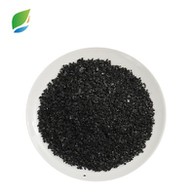
Nut shell activated carbon is a new type of activated carbon made from peach shell, apricot shell and other nutshell, activated by high temperature, carbonization, and loaded with photocatalyst and carbon fiber.

Nut shell activated carbon is a new type of activated carbon made from peach shell, apricot shell and other nutshell, activated by high temperature, carbonization, and loaded with photocatalyst and carbon fiber. It is widely used in gas treatment, sewage treatment, desulfurization and denitration, solvent recovery, nitrogen generation, air separation equipment, paint workshop and other fields.

Activated carbon (also called activated charcoal, activated coal or active carbon) is a very useful adsorbent. Due to their high surface area, pore structure (micro, meso and macro), and high degree of surface reactivity, activated carbon can be used to purify, dechlorinate, deodorize and decolorize both liquid and vapor applications.

Activated Carbon In Water Treatment
Remove sediment from alcohol.
Absorb odors and pigments in the wine.
Filter medium in wine.
What is Nut Shell Activated Carbon?
Nut shell activated carbons are a type of activated carbon that is manufactured from different types of nut shells, such as coconut shells, walnut shells, and almond shells. These nut shells are processed to remove impurities and then activated using high temperatures and steam. The resulting product has a high surface area and a porous structure, making it an effective adsorbent material.
Benefits of Nut Shell Activated Carbon
Activated carbon made from nutshell is multi-faceted and microporous, with strong dirt-carrying capacity and a high oil and suspended matter removal rate. This improves the factor's cleaning ability during production.
It has multiple edges and different particle sizes, forming deep bed filtration, which enhances oil removal capacity and filtration speed. This increases the efficiency of factories in producing clean energy.
It is hydrophilic but not lipophilic and has a suitable specific gravity, easy backwashing, and strong regeneration ability.
It has high hardness and is not easy to corrode after special treatment. There is no need to replace the filter material. Only 10% is replenished every year, which saves maintenance costs and time and improves utilization.

The nutshell activated carbons market can be categorized into two types: granule and powder.
Granule activated carbons are larger in size and generally used for applications that require a slower flow rate and longer contact time. They are commonly used in water and air purification systems.
Powder activated carbons have a smaller particle size and are frequently used in applications where a fast reaction rate is required, such as in gas masks or in the removal of impurities from liquids.
Application of Nut Shell Activated Carbon
Water treatment: Our product effectively removes impurities, organic matter, and harmful substances from water, making it ideal for drinking water purification, wastewater treatment, and industrial water processing.
Air purification: Nut Shell Activated Carbon can effectively remove harmful gases, volatile organic compounds (VOCs), and unpleasant odors from the air, improving indoor air quality and protecting occupants' health.
Gas treatment: Our activated carbon is ideal for adsorbing and removing pollutants in industrial processes, such as desulfurization, denitrification, and VOC removal.
Metal recovery: Nut Shell Activated Carbon is widely used in the recovery of precious metals like gold, silver, and other valuable elements from ore leaching solutions.
The raw materials of activated carbon mainly come from various fruit shells, such as coconut shells, apricot shells, walnut shells and so on. These fruit shells are rich in cellulose and hemicellulose, and can form porous structure after carbonization, which is suitable for the raw material of activated carbon. In addition, the silicon element in the fruit shell can also improve the adsorption performance of activated carbon. When selecting raw materials, attention should be paid to the purity, moisture content and particle size distribution of raw materials to ensure the quality of products. The raw material source of activated carbon in fruit shell is very wide, and the price is relatively low.
Preparation of materials
In the preliminary preparation work, a large number of nutshell should be collected. These nutshell need to be washed, dried and then broken into pieces. This step is mainly to remove impurities and residues to ensure the smooth progress of the next stage.
Carbonization
The carbonization stage is one of the major steps in the production of nutshell activated carbon. At this stage, the nutshell undergoes high-temperature carbonization, and the organic matter in it gradually decomposes into carbon element.
Activation
The activation stage is another key step in the production of activated carbon. At this stage, the carbonized fruit shell is further activated to improve its adsorption properties. Steam activation is the reaction of carbonized fruit shells with water vapor at high temperatures to form more microporous structures on the surface. Carbon dioxide activation involves treating carbonized fruit shells at high temperatures in a carbon dioxide atmosphere to make the surface rougher, thus enhancing the adsorption capacity.
Washing
After activation, some ash and impurities will remain on the surface of nutshell activated carbon, which needs to be rinsed. The rinsing process generally uses acid-base solution or pure water to remove impurities and ash on the surface of activated carbon.
Drying
The rinsed nut shell activated carbon needs to be dried to remove the moisture inside and improve its adsorption performance. The drying process is generally carried out using high-temperature hot air drying equipment to accelerate water evaporation and remove internal moisture.
Please store Nut Shell Activated Carbon in a cool, dry, and well-ventilated area, away from moisture and direct sunlight.
When handling the product, wear appropriate protective gear, such as gloves and a mask, to avoid skin or respiratory irritation.
Before using our activated carbon in any application, consult the relevant technical specifications and guidelines to ensure the product's suitability and optimal performance.
Nut Shell Activated Carbon may generate dust during transportation and handling. Take necessary precautions to minimize dust exposure and maintain a safe working environment.
Nutshell vs. Coconut shell vs. Coal activated carbon
The main difference is that the properties are different, the characteristics are different, and the applications are different, as follows:
Different nature
Nutshell activated carbon
It is made of high-quality environmentally friendly coconut shells, peach shells, walnut shells, jujube shells and other fruit shells as raw materials, and the activated carbon is refined by carbonization, activation, superheated steam catalysis and other processes.
Coconut shell activated carbon
Coconut shell activated carbon is made of high-quality coconut shell as raw material and refined by a series of production processes.
Coal activated carbon
Coal-based activated carbon is developed through a series of processes such as carbonization, cooling, activation, and washing.
Different characteristics
Nutshell activated carbon
It has the advantages of good wear resistance, developed voids, high adsorption performance, high strength, easy regeneration, economical and durable.
Coconut shell activated carbon
It has the advantages of developed pores, good adsorption performance, high strength, easy regeneration, economical and durability.
Coal activated carbon
It has the characteristics of developed pore structure, good adsorption performance, high mechanical strength, easily repeated regeneration and low cost.
Different applications
Nutshell activated carbon
Nutshell activated carbon is widely used in deep purification of drinking water, industrial water and wastewater and gas phase adsorption, such as water purification treatment in power plants, petrochemicals, oil refineries, food and beverage, sugar and wine, medicine, electronics, fish farming, shipping and other industries , can effectively adsorb free chlorine, phenol, sulfur and other organic pollutants in water, especially the precursor substances of mutagenic substances (THM), to purify and remove impurities and odors.
It can also be used for industrial exhaust gas purification, gas desulfurization, petroleum catalytic reforming, gas separation, pressure swing adsorption, air drying, food preservation, gas masks, mediator carrier, industrial solvent filtration, decolorization, purification, etc. Separation, purification and purification of various gases, recovery of organic solvents, decolorization, deodorization and refining of sugar, monosodium glutamate, medicine, alcohol and beverages; precious metal extraction; catalysts and catalyst carriers in the chemical industry. The product has the functions of decolorization, purification, impurity removal, deodorization, deodorization, carrier, purification and recycling.
Coconut shell activated carbon
Coconut Shell activated carbon can be used in the gas discharged from chemical plants, tanneries, paint factories and projects using various organic solvents, containing various organic solvents, inorganic and organic sulfides, hydrocarbons, chlorine, oil, mercury and other compounds. Environmentally harmful components can be adsorbed with activated carbon and then discharged. The gas discharged from the atomic energy facility contains radioactive krypton, xenon, iodine and other substances, which must be adsorbed with activated carbon before being discharged. The flue gas generated by the combustion of coal and heavy oil contains sulfur dioxide and nitrogen oxides, which are harmful components that pollute the atmosphere and form acid rain. They can also be adsorbed and removed by activated carbon.
Coal activated carbon
• Water treatment industry: Tap water, industrial water, sewage treatment, purified water, beverage, food, medical water.
• Air purification: Removal of impurities, odor, adsorption, formaldehyde, benzene, toluene, xylene, oil and gas and other harmful gas substances.
• Industry: Decolorization, purification, air purification.
• Fish farming: Filter.
• Reagent: Catalyst and catalyst carrier.
Factors to Consider When Choosing Nut Shell Activated Carbon
When selecting nut shell activated carbon for a specific application, several factors should be taken into account:
Particle size
The particle size of nut shell activated carbon affects its adsorption efficiency. Finer particles provide a larger surface area for adsorption, leading to better purification performance. However, the particle size should be selected based on the specific requirements of the application to balance adsorption capacity and pressure drop.
Surface area
The surface area of nut shell activated carbon determines its adsorption capacity. Higher surface area enables greater adsorption of contaminants. Manufacturers often specify the surface area of their activated carbon products, allowing users to select the appropriate grade based on their needs.
Adsorption capacity
The adsorption capacity of nut shell activated carbon refers to the amount of contaminants it can adsorb. It is influenced by factors such as the type and concentration of impurities, temperature, and contact time. Understanding the adsorption capacity is crucial in determining the quantity of nut shell activated carbon required for a particular application.
How Do You Regenerate Active Carbon?
Depends on what you are using it for. Activated charcoal adsorbs many hydrocarbons and odor causing substances.
You can reactivate the charcoal by heating it in an oven at 200°C (400°F).
Do NOT put the plastic cartridge in the oven!
Plastic will melt and even burn at this temperature.
If your activated charcoal in in a cartridge you can open up, then remove the charcoal and spread I'd on a baking sheet. Bake it in the oven for about 10 min.
Different hydrocarbons and odor causing chemicals have different vaporization temperatures. You might get good results just heating the filter to 100°C if the majority of adsorbed chemicals have a low vaporization temperature.
Activated Carbon (Charcoal) can adsorb so well because the granules are very porous, so they have a very large surface area. Eventually these pores can become plugged by stuff that will not vaporize readily. Then it is time to replace the charcoal.
Our Factory
Hongsen company, founded in 2000, is a professional manufacturer of activated carbon in Shijiazhuang City, Hebei Province, and currently produces various multi-purpose series of activated carbon. The company has passed ISO9001:2008 quality management system. The company researches and develops various series of activated carbon, forming a vertically integrated business structure from raw material collection and processing to product terminal sales.


Our Certificate


FAQ
Hot Tags: nut shell activated carbon, China nut shell activated carbon manufacturers, suppliers, Activated Charcoal Columnar, Industrial Activated Carbon, activated carbon water treatment, Columnar Activated Carbon, Activated Charcoal Powder For Food, activated charcoal bags