


Your Leading Shijiazhuang Hongsen Activated Carbon Co., Ltd. Supplier
Hongsen company, founded in 2000, is a professional manufacturer of activated carbon in Shijiazhuang City, Hebei Province, and currently produces various multi-purpose series of activated carbon. The company has passed ISO9001:2008 quality management system. The company researches and develops various series of activated carbon, forming a vertically integrated business structure from raw material collection and processing to product terminal sales.
Why Choose Us?
High quality
Our products are manufactured or executed to very high standards, using the finest materials and manufacturing processes.
Competitive Price
We offering a higher-quality product or service at an equivalent price. As a result we have a growing and loyal customer base.
Rich experience
Our company has many years of production work experience. The concept of customer-oriented and win-win cooperation makes the company more mature and stronger.
Global shipping
Our products support global shipping and the logistics system is complete, so our customers are all over the world.
After-sale service
Professional and thoughtful after -sales team, let you worry about us after -sales Intimate service, strong after -sales team support.
Advanced equipment
A machine, tool or instrument designed with advanced technology and functionality to perform highly specific tasks with greater precision, efficiency and reliability.
Related Product

This product uses natural high-quality wooden and coal as raw material, adopts advanced equipment and scientific technology, and is processed through screening, phosphoric acid mixing, high temperature carbonization activation, rinsing and other processes to form black powder.

Black Charcoal Wood Pellets Activated
Take high quality coal or wood as raw materail.
It is black pellets with large specific surface area.
Deveoped and reasonable pore structure.

Activated Carbon Charcoal Pellets
Columnar activated carbon is mainly made of wood and coal. Developed pore structure, Large specific surface area, High wear resistance,low resistance, large adsorption capacity, easy
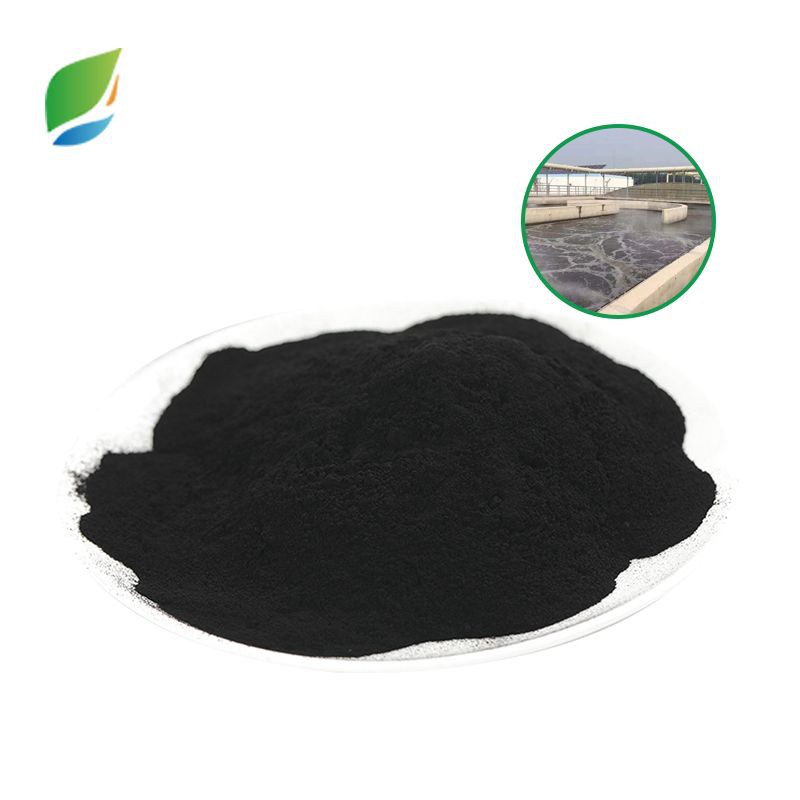
Powder Activated Carbon Filtration
Wood activated carbon powder is made from high quality fuelwood, wood chips, wood blocks, using advanced process, such as physical method, phosphoric acid method, zinc chloride method. Its has comparison area, large adsorption capacity, fast filtration speed and high ignition point, Widely used in food and beverage decolorization and other fields.

Wood activated carbon powder is made from high quality fuelwood, wood chips, wood blocks, using advanced process, such as physical method, phosphoric acid method, zinc chloride method. Its has comparison area, large adsorption capacity, fast filtration speed and high ignition point, Widely used in food and beverage decolorization and other fields.

Activated Charcoal Powder For Food
Wood activated carbon powder is made from high quality fuelwood, wood chips, wood blocks, using advanced process, such as physical method, phosphoric acid method, zinc chloride method. Its has comparison area, large adsorption capacity, fast filtration speed and high ignition point, Widely used in food and beverage decolorization and other fields.

The wood based powder activated carbon is widely used in amino acid industry, refined sugar decoloring, monosodium glutamate industry, glucose industry, starch sugar industry, food additive, one-stop solution of pigment.

Wood columnar activated carbon is made from high quality fuelwood, wood chips, wood blocks, using advanced process, such as physical method, phosphoric acid method, zinc chloride method. Its has comparison area, large adsorption capacity, fast filtration speed and high ignition point, Widely used in food and beverage decolorization and other fields.
What is Columnar Activated Carbon?
Columnar activated carbon is a kind of activated carbon. Its appearance is a small cylinder of activated carbon. The raw materials are mainly from some high-quality coal, wood chips, coconut shell, etc. Columnar activated carbon is press-formed, so high-quality prices are relatively high. It is widely used in the fields of waste gas treatment, sewage treatment, dissolution and recycling, water purification and gas purification in chemical production.
Benefits of Columnar Activated Carbon
Columnar activated carbon has low cost and quick results: The price advantage of columnar activated carbon has a great impact on the cost of investment, and can save a lot of costs. At the same time, columnar activated carbon has a good effect on sudden water pollution.
Columnar activated carbon has obvious adsorption effect on organic matter: Organic matter is a common pollutant in water, which will have a serious impact on the color and odor of water. At the same time, the molecular size of organic matter is small, and it is not easy to be processed by filtering, interception and other means. Columnar activated carbon is used as water purification Activated carbon has well-developed micropores, which is ideal for organic matter.
Columnar activated carbon can effectively remove chromaticity and odor: In addition to organic matter, the chroma and odor in sewage may be affected by other fungi, such as the smell of rust. Columnar activated carbon can remove common metal elements such as iron and manganese in water. The rate can reach 70%, and the effect of decolorization and deodorization is smooth.
The columnar activated carbon reduces the turbidity of the water body: Sewage will be accompanied by some suspended solids, colloids and other impurities. china activated carbon manufacturer The columnar activated carbon can adsorb them one by one to improve the turbidity of the water body and greatly improve the water quality.
Columnar activated carbon reduces chemical oxygen consumption: Organic matter and chemical elements in sewage will react with air and other substances in the water, pollute other substances or generate other pollutants, and deteriorate water quality. Columnar activated carbon absorbs organic matter while reducing its biochemical oxygen demand The amount of water pollution greatly reduced.
Application of Columnar Activated Carbon
Air purification: Activated carbon columns has a high adsorption capacity and can capture harmful substances in the air to removes odors and chemicals from the air. It can be used in air conditioning systems, cleaning machines, automobile engines, etc.
Solvent recovery: With the high hardness, activated carbon columns is widely used in the recovery of organic solvents such as benzene, ether, xylene, ethanol, acetone, gasoline, chloroform, carbon tetrachloride, etc in tape factory, printing industry, synthetic resin industry, rubber industry.
Water treatment: Columnar carbon will greatly reduce the small particles produced by friction in water treatment.
Gold recovery: In CIP and CIL process, hardness and activity of coconut activated carbon is opposite. The gold extraction speed is fast with low hardness and high activity, and the gold extraction speed is slow with high hardness and low activity. Columnar activated carbon in the gold industry, not only high hardness but also good activity are required. We are professional activated carbon column manufacturers. Our pellet activated carbon are uniform inside and can slow down the rate of activity reduction. So that both requirements are met.
Material of Columnar Activated Carbon
Activated carbon, or activated charcoal, is a highly porous and adsorbent material employed in diverse applications like water treatment, air purification, and chemical processing. Various raw materials can be used to produce activated carbon pellets:
Wood-based
Derived from hardwoods, softwoods, or other wood types (e.g., pine, oak, eucalyptus, bamboo), wood-based activated carbons are frequently used in water purification and air filtration applications.

Coconut shell-based
With high microporosity, activated carbon from coconut shells is particularly effective at removing small molecules and organic compounds. It is used for water treatment, air purification, and deodorization.

Coal-based
Produced from bituminous or sub-bituminous coal, coal-based activated carbons boast high adsorption capacities and are widely used in gas purification, solvent recovery, and chemical processing applications.
Other sources
Activated carbon can also be produced from various other organic materials, such as peat, sawdust, nutshells (e.g., walnut, almond), fruit stones (e.g., olive, peach), and waste materials like rice husks and sugarcane bagasse. Raw material choice depends on factors like availability, cost, and the final product's desired properties.
The production of activated carbon columns typically involves several steps, including:
Firstly, the raw coal is pulverized to a certain fineness (generally more than 95% passes through 180 mesh).
Add a certain amount of binder (commonly used binder is coal pitch tar, sulfite pulp waste liquid, molasses, starch solution, carboxymethyl cellulose, etc.) and water (when catalytic activation method is used, simultaneously add a certain amount of catalyst) kneading at a certain temperature for a certain time.
After the added binder, water and coal powder are fully infiltrated and dispersed evenly, they are extruded into charcoal rods under a certain pressure by a molding machine with a certain diameter extrusion die.
The charcoal strips are air-dried and then carbonized, and the carbonized carbonized materials are screened into qualified carbonized materials, which are added to the activation furnace for activation.
After the activated activated material is screened and packaged, it becomes the finished product of columnar activated carbon.
When sieving the activated material, there will be undersieves, which can be used to produce by-products and can be recycled. The particles of the undersieves are used to produce crushed granular activated carbon products, and the powder parts of the undersieves are milled to produce powdered activated carbon products.
Columnar activated carbon sometimes needs to be pickled, impregnated and other treatments according to market demand.
How to Maintain Columnar Activated Carbon
Activated carbon is stable and can be stored for many years in its shipping container or package if protected from contaminating vapors and liquids. Activated carbon deteriorates only by doing work; that is, by acting as a catalyst or adsorbing vapors, gases and dissolved substances. Because it is relatively pure carbon, it is resistant to most acids, alkalis, chemicals and corrosive substances. Repeated heating and cooling has little effect on its physical structure. In solvent recovery plants, the adsorbent has been subject to as many as 10,000 heating and cooling cycles with no appreciable breakdown of the granules or pellets.
Carbon is typically used in a column contactor. The columns are called adsorbers and are designed specifically for air and water. The design is engineered for loading (amount of fluid per area cross section), contact time (a minimum contact time is needed to insure required removal) and pressure drop through the adsorber (needed to size container pressure rating and fan/pump design rating). The standard General Carbon adsorbers are pre-engineered to meet all of the requirements for good adsorber design. We can also design special designs for applications outside the normal range.
Organic chemicals are attracted to carbon the best. Very few inorganic chemicals will be removed by carbon. The molecular weight, polarity, solubility in water, temperature of the fluid stream and concentration in the stream are all factors that affect the capacity of the carbon for the material to be removed. VOCs such as Benzene, Toluene, Xylene, oils and some chlorinated compounds are common target chemicals removed through use of carbon. Other large uses for activated carbon are the removal of odors and color contamination.
In commercial color remediation, activated charcoal is used after the initial extraction process to remove chlorophyll and other pigments from the crude extract. Essentially, the carbon is used to polish the crude oil to improve its quality.
Extraction technicians may use a carefully vetted lineup of filter media within a color remediation column (CRC) as part of their post-processing workflow. The CRC step fits between the extraction and recovery column.
Popular filter media pairings alongside carbon filters include silica gel, activated bleaching earth, or bentonite clay. Operators strategically stack the media into the CRC in a layered fashion allowing different impurities to be filtered in a certain order.
Activated carbon can come in multiple forms including black and odorless powders and granules, which can be packed inside the CRC.
When handling loose carbon, processors are recommended to wear the proper personal protective equipment (PPE) including safety glasses, protective gloves, lab coats or overalls, and respiratory protection.
When using activated carbon, the workroom should have sufficient air exchange and/or exhaust for proper ventilation and to avoid dust formation during loading and unloading.
As an alternative, carbon-impregnated filter modules can streamline the handling of carbon and reduce hazards associated with powdered carbon. Compared to loose carbon, the immobilized activated carbon results in a forced contact of the undesirable particles allowing for shorter contact time and less carbon material required.
As the cannabis extract passes through the packed CRC, undesirables like chlorophyll become trapped in the pores of the carbon, thereby, reducing the dark color. In the end, processors produce a clearer final product with a better taste compared to one without color remediation.
Our Factory
Hongsen company, founded in 2000, is a professional manufacturer of activated carbon in Shijiazhuang City, Hebei Province, and currently produces various multi-purpose series of activated carbon. The company has passed ISO9001:2008 quality management system. The company researches and develops various series of activated carbon, forming a vertically integrated business structure from raw material collection and processing to product terminal sales.


Our Certificate


FAQ
Hot Tags: columnar activated carbon, China columnar activated carbon manufacturers, suppliers, Gold Extraction Activated Charcoal, Wood Vinegar, Coconut Shell Charcoal Activated Carbon, Nut Shell Activated Carbon, Nutshell Activated, Black Charcoal Wood Pellets Activated


