


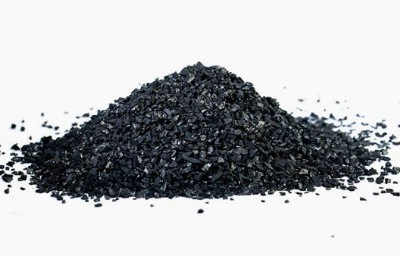
Mesh size is a core parameter in activated carbon selection, but it functions very differently across granular activated carbon (GAC), powdered activated carbon (PAC), and pellet activated carbon. Engineers often assume mesh size is a universal measurement; however, each carbon type follows a distinct sizing system due to its structure, production method, and end-use application.
This article provides a technical comparison of mesh size requirements for GAC, PAC, and pellets-offering practical guidance for design engineers, filtration system manufacturers, and buyers. For readers who want to understand how particle size affects adsorption kinetics, see our main guide How Activated Carbon Adsorption Works.
1. What Mesh Size Represents in Activated Carbon Classification
1.1 Mesh size vs. actual particle size
In activated carbon grading, "mesh size" refers to the screen opening through which particles pass or are retained. While the concept is straightforward, the relationship between mesh number and actual particle diameter is not linear. Activated carbon has irregular geometry, internal porosity, and variable particle density, so mesh size is used as a classification range rather than an exact measurement.
1.2 Why do different carbon forms use different-sized systems
Each carbon type relies on a sizing method that aligns with its physical structure:
- GAC → Defined using ASTM mesh screens (4×8, 6×12, 8×30, etc.)
- PAC → Too fine for sieve analysis; measured using D50, D90, or laser particle analysis
- Pellets → Extruded into uniform cylinders; size defined by diameter (mm) and length
Because of these structural differences, mesh size requirements cannot be directly compared across GAC, PAC, and pellets.
2. Mesh Size Requirements for Granular Activated Carbon (GAC)
Granular activated carbon is widely used in water and air treatment systems. Its mesh size affects hydraulic behavior, adsorption rate, and bed stability.
2.1 Common GAC mesh size grades
- 4×8 – Large particle size for high-flow air applications
- 6×12 – Standard grade for municipal and industrial water treatment
- 8×30 – Higher adsorption rate, suitable for VOC removal and liquid phase polishing
- 12×40 – Smallest GAC grade, used where contact time is limited
2.2 How mesh size influences GAC performance
Larger particles (4×8, 6×12):
- Lower pressure drop
- Higher mechanical stability
- Suitable for systems with large flow variations
Smaller particles (8×30, 12×40):
- Shorter diffusion path → faster adsorption kinetics
- Higher pressure loss → requires stronger pump/blower design
In practical engineering, balancing bed pressure drop and adsorption rate is the key sizing challenge.
2.3 Application-based mesh size selection
- Drinking water filtration → 8×30 or 12×40
- Industrial wastewater → 6×12
- Air purification (VOCs) → 4×8 or 6×12
- Desulfurization and gas treatment → 4×8
3. Mesh Size Requirements for Powdered Activated Carbon (PAC)
PAC consists of very fine particles, typically sized below 100 μm, making traditional mesh classification unreliable. Instead, laser diffraction or sedimentation analysis is used.
3.1 PAC sizing conventions
- 80–100 mesh (coarse PAC)
- 100–200 mesh (general-purpose PAC)
- 200–325 mesh (fine PAC)
- D50 and D90 values for precision grading
D50 represents the particle size at which 50% of the particles are smaller, and D90 indicates the upper limit for most of the distribution. These indicators are more meaningful than mesh screens for PAC users.
3.2 How fineness affects PAC performance
(1)Finer PAC → faster adsorption, especially for taste/odor compounds
(2)Coarser PAC → easier sedimentation in clarification processes
(3)Extremely fine PAC may cause:
- Increased filter loading
- Higher turbidity in finished water
- More frequent backwashing
3.3 Typical applications
- Emergency dosing for odor/organic spikes
- Drinking water taste & odor control
- Food-grade decolorization
- High-COD wastewater polishing
- Sludge incineration flue gas treatment (as injection carbon)
PAC mesh requirements depend heavily on the contact time available and the coagulation/settling system in place.
4. Pellet Activated Carbon: Why Mesh Size Does Not Apply
Extruded activated carbon pellets differ fundamentally from GAC and PAC. Pellets have a consistent cylindrical geometry, typically in:
- 2 mm
- 3 mm
- 4 mm
- 5 mm
- 8 mm
4.1 Size identification
Pellets are graded by:
- Diameter (mm)
- Length distribution
- Crush strength
- Bulk density
Mesh size is not used because pellets do not pass through screens like granular materials.
4.2 How pellet diameter affects system performance
Smaller diameter (2–3 mm):
- Higher surface exposure
- Faster breakthrough time
- Higher pressure drop
Larger diameter (4–8 mm):
- Lower pressure drop
- Suitable for high airflow rates and industrial gases
- More stable bed structure
Pellets are widely preferred in air-phase systems because their uniform geometry ensures predictable flow and low operational resistance.
4.3 Typical pellet applications
- VOC control systems
- Chemical processing exhaust
- Catalyst support and impregnated carbon
- Municipal and industrial odor control
- Flue gas purification
5. Comparative Overview of Mesh Size Requirements
Mesh Size Comparison Table
| Carbon Type | Size Expression | Performance Logic | Typical Uses |
|---|---|---|---|
| GAC | 4×8, 6×12, 8×30, 12×40 | Balance between adsorption rate & hydraulic stability | Water & air treatment |
| PAC | 80–325 mesh, D50, D90 | Fineness determines adsorption kinetics & mixability | Dosing & rapid adsorption |
| Pellets | 2–8 mm diameter | Uniform shape → stable bed & low pressure drop | Gas-phase purification |
6. How to Select the Right Size for Your Application
Use the following engineering considerations:
Contact time available
- Short → PAC or small GAC (12×40)
- Medium → 8×30
- Long → pellets or large GAC (4×8, 6×12)
Hydraulic or airflow limitations
- Strict pressure limits → pellets or large GAC
- Flexible pressure design → smaller GAC
Pollutant characteristics
- Small molecules → smaller GAC or PAC
- VOCs and industrial gases → pellets
System type
- Dosing injection → PAC
- Fixed bed → GAC or pellets
Operation & maintenance costs
- Smaller particles → more efficient but higher O&M requirements
- Larger particles → stable operation but lower adsorption speed
7. Conclusion
Mesh size has different meanings and performance implications across GAC, PAC, and pellet activated carbon. Understanding how each sizing method relates to adsorption kinetics, pressure loss, and system design is crucial for selecting the correct carbon grade.